
Turkey Work Permit 2026: How Foreigners Apply (Calisma Izni)
Everything you need to know about working legally in Turkey as a foreigner, from employer sponsorship to getting your permit card.
To work legally in Turkey, you need a work permit (calisma izni) sponsored by a Turkish employer. Your employer applies through the Ministry of Labour's online e-izin system, the process takes 30 to 45 working days, and the permit doubles as your residence permit, so you do not need a separate ikamet.
I have helped dozens of people navigate the Turkish work permit process over the years, and the single most important thing to understand is this: you cannot simply decide to work in Turkey and sort out the paperwork later. The system is employer-driven. Without a company willing to sponsor you, there is no application to submit. That said, once you understand how the process works, it is far more straightforward than most people expect.
This guide walks you through every stage of obtaining a Turkish work permit in 2026, from the legal framework under Law 6735 to the specific documents you will need, the costs involved, and what to do if things go wrong. Whether you are being transferred by a multinational, have found a job through a local contact, or are exploring self-employment options, this is the guide I wish I had when I first arrived.

The Legal Framework: Law 6735
Turkey's work permit system is governed by Law 6735, the International Labour Force Law, which came into effect on 13 August 2016. This law replaced the older Law 4817 and consolidated all regulations around foreign employment into a single piece of legislation. You can read the full text on mevzuat.gov.tr, Turkey's official legislation database, though it is only available in Turkish.
Law 6735 established several important principles. First, it created a unified system where the work permit also functions as a residence permit. Before this law, foreigners had to juggle two separate applications with two different government bodies. Second, it introduced the Turkuaz Kart (Turquoise Card) system for highly qualified workers. Third, it set out clear rules about which foreigners are exempt from needing a work permit, and which sectors have additional restrictions.
The law gives the Ministry of Labour and Social Security (Calisma ve Sosyal Guvenlik Bakanligi) primary authority over work permit decisions. However, the Ministry consults with other bodies, including the Ministry of Interior, the Ministry of Foreign Affairs, and relevant professional chambers, depending on the applicant's sector and nationality. Understanding this is important because it explains why processing times can vary; your application might sail through in 30 days, or it might take 60 if additional consultations are needed.
One key provision that catches many people off guard is the "foreigner ratio" rule. Under Law 6735, employers in most sectors cannot have more foreign employees than a certain percentage of their total workforce. The standard ratio is one foreign worker for every five Turkish employees, though this varies by sector and can be adjusted by ministerial decision. This means a small startup with three employees may struggle to sponsor a foreign worker, while a larger company with 50 staff will find it much easier.
Who Needs a Work Permit (and Who Does Not)
The general rule is simple: any foreigner who wants to work in Turkey, whether as an employee, freelancer, or business owner, needs a work permit. This applies regardless of whether you are being paid by a Turkish company or a foreign one, and regardless of whether you hold a valid residence permit. A tourist or short-term residence permit does not give you the right to work.
However, there are exemptions. The following categories of foreigners do not need a work permit:
- Diplomats and consular staff accredited by the Ministry of Foreign Affairs
- NATO personnel and their dependants stationed in Turkey under the Status of Forces Agreement
- Turkuaz Kart holders, who have an indefinite right to work (though the card itself is issued through a separate process)
- Foreign nationals in free trade zones, who are governed by the Free Zones Law rather than Law 6735
- Refugees and conditional refugees with valid international protection status, after a six-month waiting period
- Spouses of Turkish citizens who hold a family residence permit (they still need a work permit in theory, but the application process is simplified and the foreigner ratio does not apply)
There are also sector-specific rules. For example, certain professions are reserved exclusively for Turkish citizens under various laws, including dentistry, pharmacy, veterinary medicine, customs brokering, and notary public services. If your profession falls into one of these categories, no employer can sponsor you regardless of their size or willingness.
Types of Work Permits
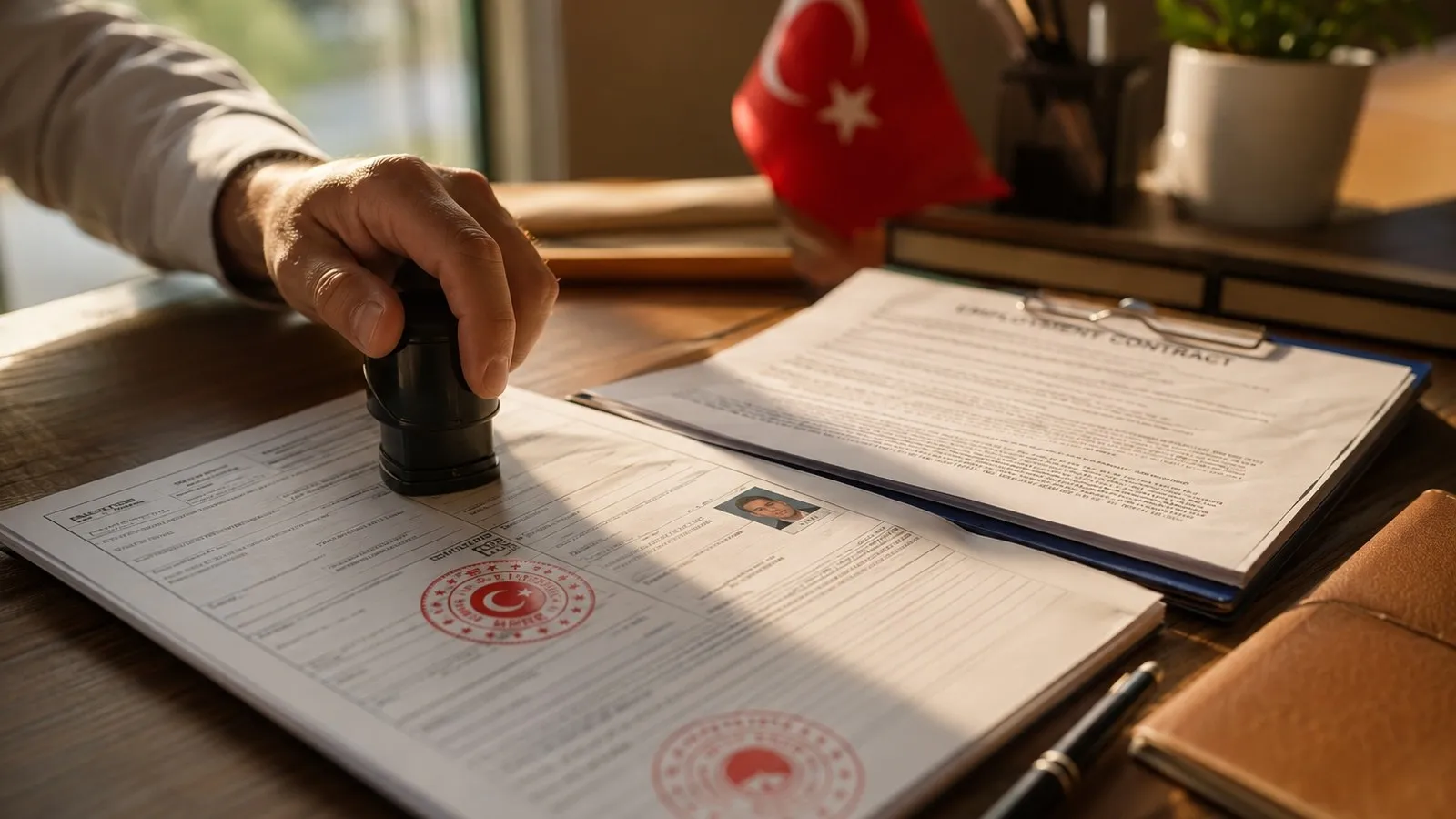
Turkey issues several categories of work permit, and the one you need depends on your situation:
Definite-Period Work Permit (Sureli Calisma Izni)
This is the standard work permit and what most foreigners receive. For a first-time application, it is issued for a maximum of one year. When you renew, the second permit can be issued for up to two years, and subsequent renewals for up to three years. The permit is tied to a specific employer and a specific job role; if either changes, you need a new application. This is the permit type I will focus on throughout this guide, as it covers the vast majority of cases.
Indefinite Work Permit (Suresiz Calisma Izni)
After eight years of continuous legal employment in Turkey (or six years with a long-term residence permit), you can apply for an indefinite work permit. This gives you the same employment rights as a Turkish citizen, with a few exceptions. You can work for any employer, in any sector (excluding those reserved for citizens), without needing sponsorship. The eight-year clock resets if you leave Turkey for more than six consecutive months.
Independent Work Permit (Bagimsiz Calisma Izni)
This permit is for foreigners who want to work independently, without an employer. Think consultants, freelancers, and sole proprietors. The bar is considerably higher than for employer-sponsored permits: you need to demonstrate professional qualifications, present a business plan, and show that your work will contribute to the Turkish economy. In practice, most people who want to work independently find it easier to open a Turkish bank account, establish a limited company (limited sirket), and then have that company sponsor their work permit.
Turkuaz Kart (Turquoise Card)
Introduced by Law 6735, the Turkuaz Kart is Turkey's answer to the US Green Card. It provides an indefinite work and residence permit for highly qualified foreigners, strategic investors, internationally recognised scientists, academics, athletes, and artists. The initial card is issued for a three-year transition period; after three years of compliance, it becomes permanent. Turkuaz Kart holders can work for any employer or independently, and their spouse and dependent children receive a Turkuaz Kart Family permit.
The Application Process, Step by Step
The Turkish work permit application process is overwhelmingly employer-driven. As the foreign employee, your role is primarily to provide documents and wait. Here is how it works in practice:
Step 1: Secure a Job Offer
Before anything else, you need a firm job offer from a Turkish employer. The employer must be a registered legal entity in Turkey, whether a limited company (limited sirket), joint stock company (anonim sirket), or a branch office of a foreign company registered with the Turkish Trade Registry. Sole traders (sahis firmasi) can also sponsor work permits, but this is uncommon and the requirements are stricter.
Your prospective employer needs to meet several criteria. They must have at least five Turkish employees for every foreign worker they want to hire (the foreigner ratio). Their paid-up capital must be at least 100,000 TL, or their gross revenue must be at least 800,000 TL, or their total exports in the preceding year must be at least 250,000 USD. These thresholds are adjusted periodically, so your employer should verify the current figures with the Ministry.
Step 2: Employer Applies Online via E-Izin
Your employer submits the application through the e-izin system, the Ministry of Labour's electronic work permit portal. The employer needs an e-Government (e-Devlet) gateway login and must be registered on the system. If they have not used the system before, the first-time registration takes an extra day or two.
During the online application, the employer uploads their company documents and enters details about the position, salary, and the foreign employee. The system generates a reference number, which you will use to track the application's progress.
Step 3: Submit Supporting Documents
Within six working days of the online application, the employer must physically deliver (or send by registered post) a file of supporting documents to the Ministry of Labour's General Directorate of International Labour Force in Ankara. Missing this deadline means the application is automatically cancelled.
If you are applying from outside Turkey, you also need to apply for a "work visa" at the Turkish consulate in your country of residence within ten working days of the e-izin application. This is a specific visa type (different from a tourist visa) and the consulate will forward your application to the Ministry as part of the process.
Step 4: Ministry Evaluation
The Ministry of Labour evaluates the application against its criteria. This includes checking the employer's financial standing, the foreigner ratio, whether the position genuinely requires a foreign worker, and whether the offered salary meets the minimum thresholds. The Ministry may also consult with the relevant professional chamber (for example, the Chamber of Engineers for engineering positions).
This stage typically takes 30 working days but can extend to 45 or even 60 working days. You can check the status through the e-izin system using your reference number. Statuses include "evaluation in progress" (degerlendirilmektedir), "approved" (onaylandi), and "rejected" (reddedildi).
Step 5: Receive Your Permit Card
If approved, the Ministry sends the work permit card (calisma izin belgesi) to the employer's registered address. This plastic card looks similar to a residence permit card and contains your photograph, personal details, the employer's details, and the permit's validity dates. It also functions as your residence permit, so you do not need to visit the immigration office separately.
Step 6: Begin Employment
Once you have the card in hand, you can start working. Your employer must register you with SGK (the Social Security Institution) on your first day of employment. They must also notify the Ministry of Labour that you have started work. If you do not begin working within 30 days of the permit's start date without notifying the Ministry, the permit may be cancelled.
Required Documents
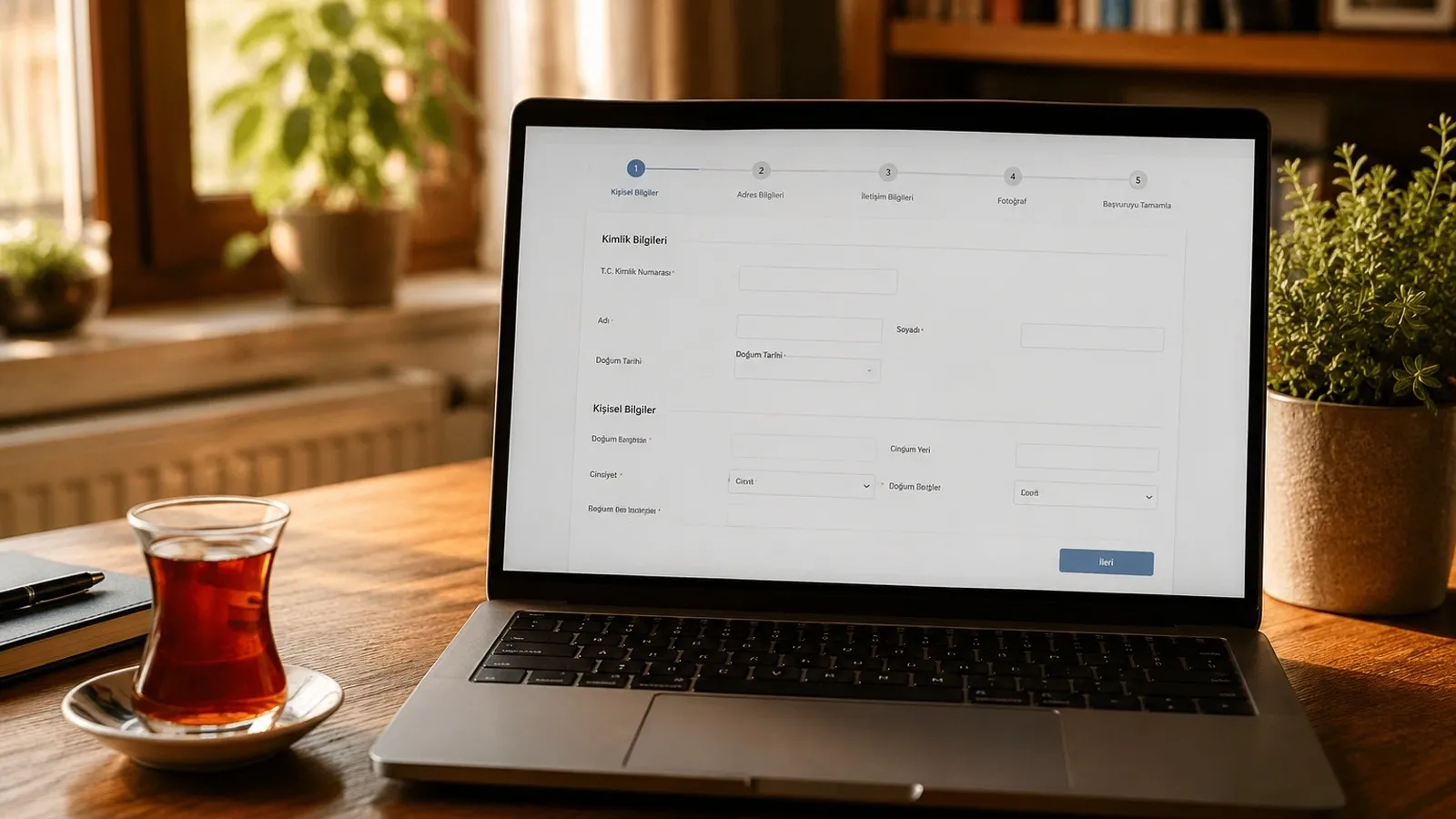
The document requirements are split between what the employer provides and what you, as the foreign employee, need to submit. Getting this right first time is critical, because incomplete documentation is the single most common reason for delays and rejections.
Employer Documents
- Work permit application petition (signed by the company's authorised representative)
- Trade Registry Gazette (Ticaret Sicil Gazetesi) showing the company's current status
- Latest tax return or balance sheet demonstrating the company meets the capital/revenue thresholds
- SGK (social security) employee list showing the current Turkish workforce and foreigner ratio
- Power of attorney if someone other than the legal representative is handling the application
- A statement explaining why the position requires a foreign worker and why a Turkish candidate could not fill it
- The employment contract (is sozlesmesi) signed by both parties, specifying the role, salary, and duration
Employee Documents
- Valid passport with at least 18 months' remaining validity
- Four biometric passport photographs (white background, taken within the last six months)
- University diploma or professional qualification certificate, sworn translated into Turkish and apostilled
- CV or resume detailing relevant professional experience
- Health insurance valid in Turkey (your employer's group policy usually suffices)
- Criminal record certificate from your home country, apostilled and translated
- For regulated professions: equivalency certificate from the relevant Turkish authority (for example, YOK for academic positions)
All foreign-language documents must be translated by a sworn translator (yeminli tercuman) and notarised. If your country is a signatory to the Hague Convention, documents also need an apostille from the relevant authority in your home country. If your country is not a Hague signatory, you will need consular legalisation instead, which takes longer.
Costs and Fees
The costs of a Turkish work permit are shared between the employer and the employee, though in practice many employers cover all costs as part of the employment package. Here is a breakdown of the main expenses in 2026:
| Fee | Approximate Cost (2026) | Paid By |
|---|---|---|
| Work permit card fee (1 year) | 2,500 TL | Employee |
| Value stamp duty (degerli kagit bedeli) | 650 TL | Employee |
| Sworn translation of documents | 1,500 - 4,000 TL | Employee |
| Notarisation fees | 500 - 1,500 TL | Employee |
| Apostille (in home country) | Varies by country | Employee |
| Work visa fee (if applying from abroad) | Varies by nationality | Employee |
The work permit card fee increases with longer permits: a two-year permit costs roughly 5,000 TL and a three-year permit around 7,500 TL. The Ministry adjusts these figures annually, so check the Ministry of Labour's website for the most current schedule. In total, expect to spend somewhere between 5,000 and 12,000 TL on a first-time one-year work permit when you factor in all translation, notarisation and card fees.
How the Work Permit Doubles as a Residence Permit
One of the most significant changes introduced by Law 6735 is that a valid work permit simultaneously serves as a residence permit (ikamet izni). This means that if you hold a work permit, you do not need to apply for a separate residence permit at the Provincial Directorate of Migration Management. Your work permit card is your proof of legal residence.
This has practical implications worth understanding. Your work permit period counts towards the residence requirements for Turkish citizenship. If you hold a work permit continuously for five years, you meet the residence requirement for citizenship by application (though other criteria also apply). Similarly, your work permit period counts towards the eight-year requirement for a long-term residence permit.
However, there is an important caveat. If your work permit is cancelled or expires, your residence status also ends immediately. You typically have a short grace period (usually 10 days) to either leave Turkey or apply for a different type of residence permit. If you are between jobs, you cannot simply rely on your expired work permit for residence; you would need to apply for a short-term residence permit to bridge the gap.
For your dependants (spouse and children under 18), your work permit does not automatically grant them residence. They will need to apply for a family residence permit separately, listing you as the sponsor. The good news is that having a work permit makes their residence applications much more straightforward.
Processing Time: What to Realistically Expect
The Ministry of Labour is required by law to evaluate work permit applications within 30 working days. In practice, the timeline looks more like this:
- E-izin application submission: 1 to 2 days (assuming the employer already has an account)
- Document delivery to the Ministry: within 6 working days of the online application
- Ministry evaluation: 30 to 45 working days (can extend to 60 for complex cases)
- Card printing and delivery: 5 to 10 working days after approval
So from start to finish, you are looking at roughly 6 to 10 weeks in a straightforward case. The most common delays occur when the Ministry requests additional documents (ek evrak talebi), which effectively pauses the clock until you provide them. If you are applying from outside Turkey, add extra time for the consular process.
A practical tip: do not resign from your current position or book one-way flights until you have the physical card in hand. I have seen applications that were tracking smoothly suddenly stall for weeks due to inter-ministerial consultations or system backlogs. Plan for the best case but prepare for the worst.
Renewing Your Work Permit
Work permit renewals follow a similar process to the initial application, with a few important differences. The renewal application must be submitted through the e-izin system at least 60 days before your current permit expires. Yes, 60 days, not 30. This catches many people off guard. If you apply late, you risk a gap in your work and residence status.
The good news is that renewal applications are generally processed faster than first-time applications, often within 15 to 20 working days. The document requirements are also slightly lighter; you usually do not need to re-submit documents that have not changed (like your diploma or criminal record), though the Ministry may request updated versions.
Your second work permit can be issued for up to two years (compared to the one-year maximum for first-time permits), and subsequent renewals can be for up to three years. This progression means that after your first year, the administrative burden decreases significantly.
One important point: if you change employers, it is not a renewal but a brand new application. The new employer must submit a fresh application through the e-izin system, and the process starts from scratch with full evaluation. This is true even if you are moving to a similar role in the same industry.
Common Rejection Reasons
Understanding why applications get rejected helps you avoid the same pitfalls. Based on what I have seen over the years, here are the most common reasons:
- Incomplete documentation: The single biggest reason. Missing a single document or providing a translation without proper notarisation can result in rejection rather than a request for supplementary documents.
- Foreigner ratio violation: The employer does not have enough Turkish employees relative to the number of foreigners they are trying to hire.
- Employer financial thresholds: The company does not meet the minimum capital, revenue, or export requirements.
- Position does not justify a foreign worker: The Ministry may decide that the role could be filled by a Turkish national, particularly for positions that do not require specific foreign language skills or specialised expertise.
- Salary below minimum thresholds: The offered salary must be at least 1.5 times the Turkish minimum wage for most positions, and higher for certain qualified roles.
- Late document delivery: The employer missed the six-working-day deadline to submit physical documents after the e-izin application.
- Previous immigration violations: If you have overstayed a previous visa, worked without a permit, or have a deportation order on record.
If your application is rejected, you have two options. You can file a formal objection (itiraz) with the Ministry within 30 days, providing additional documentation or arguments to address the rejection reason. Alternatively, you can simply correct the issue and reapply from scratch. In my experience, a fresh application with corrected documents is often faster and more effective than the objection process.

Freelancing and Self-Employment Options
If you want to work for yourself in Turkey rather than for an employer, you have two main routes:
Independent Work Permit
The independent work permit (bagimsiz calisma izni) allows you to work without an employer sponsor. However, the requirements are demanding. You must demonstrate at least five years of professional experience in your field, hold relevant qualifications, and present a detailed business plan showing how your activities will benefit the Turkish economy. You also need proof of sufficient financial resources to support yourself. Applications are evaluated case by case, and approval rates are lower than for employer-sponsored permits.
Establishing a Turkish Company
The more practical route, and the one I usually recommend, is to establish a Turkish limited company (limited sirket) and have that company sponsor your work permit. A foreigner can be both a shareholder and the general manager of a Turkish company. The company then applies for your work permit through the standard e-izin process, with you as the foreign employee. This approach is more predictable and has a much higher success rate than the independent permit route.
To set up a company, you will need a Turkish tax number, a Turkish bank account for the company's capital deposit, and a registered office address. The minimum capital for a limited company is 10,000 TL, though having more capital strengthens your work permit application. The company registration process itself takes about one to two weeks through a SMMM (certified public accountant).
Keep in mind that as a company owner, you are responsible for monthly tax declarations, employee social security payments, and annual financial statements, even if you are the only employee. Factor these ongoing administrative costs into your planning.
Work Permits for Specific Sectors
Certain sectors have additional requirements or different processes:
Education and Teaching
Foreign teachers at international schools and universities follow a modified process. The educational institution applies through the Ministry of National Education (MEB) or the Council of Higher Education (YOK) rather than directly to the Ministry of Labour. Your qualifications must be recognised by the relevant Turkish authority, and for university positions, you typically need your diploma equivalency approved by YOK. The processing time is similar, but the evaluation criteria focus more on academic qualifications.
Tourism and Hospitality
The tourism sector has some of the most flexible rules for foreign workers, particularly in areas heavily dependent on international tourism. The foreigner ratio is more generous, and there are seasonal work permit options for positions that only exist during the tourist season. Hotels, tour operators, and restaurants in tourist areas regularly employ foreign staff, particularly those who speak the languages of the main tourist demographics.
Domestic Workers
Hiring a foreign domestic worker (live-in carer, housekeeper, nanny) requires the employer to be an individual rather than a company. The employer must demonstrate sufficient income to pay the worker, and the salary must meet at least the minimum wage. The Ministry applies additional scrutiny to these applications to prevent exploitation, and the worker must live at the employer's registered address.
Free Trade Zones
Foreigners working in Turkey's designated free trade zones (serbest bolgeler) are exempt from the standard work permit requirement under the Free Zones Law. Instead, they obtain an operating licence through the free zone authority. This is a significantly simpler process, which is one reason why many international companies choose to base their Turkish operations in free zones.
Practical Matters Once You Have Your Permit
With your work permit in hand, several other bureaucratic processes become available or easier:
- Driving licence: You can exchange your foreign driving licence for a Turkish one, which is essential if you plan to drive regularly.
- Bank accounts: Having a work permit makes opening a Turkish bank account straightforward. Most banks will open a full account (not just a foreigner account) once they see your work permit.
- Tax number: Your employer will arrange your tax registration, and your salary will be subject to Turkish income tax and social security contributions.
- Healthcare: As a work permit holder registered with SGK, you are entitled to use the public healthcare system. Your employer's social security contributions include health insurance premiums.
- Citizenship pathway: Continuous legal residence (including via work permit) for five years makes you eligible to apply for Turkish citizenship.
When to Use Professional Help
Honestly, if your employer has an experienced HR department or a lawyer who regularly handles work permits, you may not need additional help. The process is bureaucratic but not inherently complicated for employers who have done it before.
However, professional assistance through our work permit service becomes valuable in several scenarios: when your employer has never sponsored a foreign worker before, when your case involves unusual circumstances (such as a sector-specific exemption or a freelance arrangement), when you are applying from outside Turkey and need coordination between the consulate and the Ministry, or when a previous application was rejected and you need to navigate the objection process.
We can also help with the sworn translations and notarisation of your documents, which saves considerable time if you are not yet in Turkey or do not speak Turkish. Our residence permit service can also help your family members obtain their dependent residence permits once your work permit is in place.