
How to Get Turkish Citizenship in 2026: The Complete Guide
Everything you actually need to know - investment thresholds, documents, timelines, costs and the bureaucratic friction nobody else warns you about.
The quickest route to a Turkish passport is the investment programme: buy property worth at least $400,000, keep it for three years, and you, your spouse and children under 18 become Turkish citizens - typically within 6 to 12 months. No residency, no language test, no points system.
Routes to Turkish Citizenship
There are four main paths to a Turkish passport. The right one depends on your situation, budget and how quickly you need it.
- Citizenship by investment - The fast track. Invest at least $400,000 in property (or $500,000 via other channels) and apply immediately. This is what most foreigners use and what this guide focuses on.
- Marriage to a Turkish citizen - After 3 years of marriage, you can apply. There is an interview and investigation process, and it is not automatic.
- Exceptional circumstances (istisnai vatandaslik) - For people who have made a significant contribution to Turkey in science, industry, sport or culture. Rare and discretionary.
- Standard naturalisation - Live in Turkey continuously for 5 years on a valid residence permit, demonstrate basic Turkish language ability, show sufficient income, and apply. The slowest route, but the cheapest.
We will cover each route, but let us start with the one most readers are here for - investment.
Citizenship by Investment - The Main Route
Turkey's citizenship by investment programme (CBI) launched in 2017 and has been one of the most popular golden visa programmes globally. The rules have tightened over the years - the property threshold jumped from $250,000 to $400,000 in June 2022 - but it remains one of the most accessible CBI programmes available.
The $400,000 real estate route
This is by far the most common path. You buy one or more properties with a combined value of at least $400,000, have the title deed annotated with a 3-year no-sale clause, and apply for citizenship. Here is what matters:
- The $400,000 is measured at the USD exchange rate on the day of application, not the day you pay. Currency fluctuations can catch people out.
- You can combine multiple properties to reach the threshold - it does not have to be a single purchase.
- The property must be purchased from a Turkish citizen or a Turkish company. Buying from another foreigner does not qualify.
- A 3-year no-sale annotation (satilmaz serhi) is placed on the tapu. You cannot sell, transfer or encumber the property during this period.
- Off-plan purchases can qualify, but the developer must hold the title deed and the property must be valued at $400,000+ by an SPK-licensed appraiser.
Alternative $500,000 investment routes
If property is not your thing, there are four other qualifying investments, all at a $500,000 minimum:
| Route | Minimum | Hold Period | Notes |
|---|---|---|---|
| Bank deposit | $500,000 | 3 years | Must remain in a Turkish bank; can be TRY or foreign currency |
| Government bonds | $500,000 | 3 years | Turkish government bonds purchased through a licensed broker |
| Fixed capital investment | $500,000 | 3 years | Investment into a Turkish business, verified by the Ministry of Industry |
| Job creation | 50 jobs | Ongoing | Must create at least 50 Turkish social security-registered jobs |
In practice, about 90% of CBI applicants go with property. The bank deposit route is the next most common. The job creation route is extremely rare for individual applicants.
The Real Estate Route in Detail
Buying property for citizenship purposes is not quite the same as a normal purchase. There are extra steps that trip people up, and the order matters.
Finding qualifying property
Any residential, commercial, or land property can qualify, but you need to verify a few things before signing anything:
- The seller must be a Turkish citizen or Turkish-registered company - check the tapu beforehand.
- The property must not have been previously used for a CBI application within the last 3 years.
- Military zone clearance must be obtainable (some areas near military bases are restricted for foreign buyers).
- There must be no existing annotations, liens or encumbrances that would prevent the no-sale annotation.
We strongly recommend working with a lawyer who specialises in CBI transactions. Estate agents will happily sell you a property, but they are not responsible for ensuring it qualifies. See our guide to buying property in Turkey for a full walkthrough of the purchase process.
The SPK-licensed appraisal
This is non-negotiable and causes more problems than any other step. The property must be valued by an appraisal company licensed by the SPK (Sermaye Piyasasi Kurulu - the Capital Markets Board of Turkey). Not any appraiser will do - it must be SPK-licensed, and the list of approved companies is published on the SPK website.
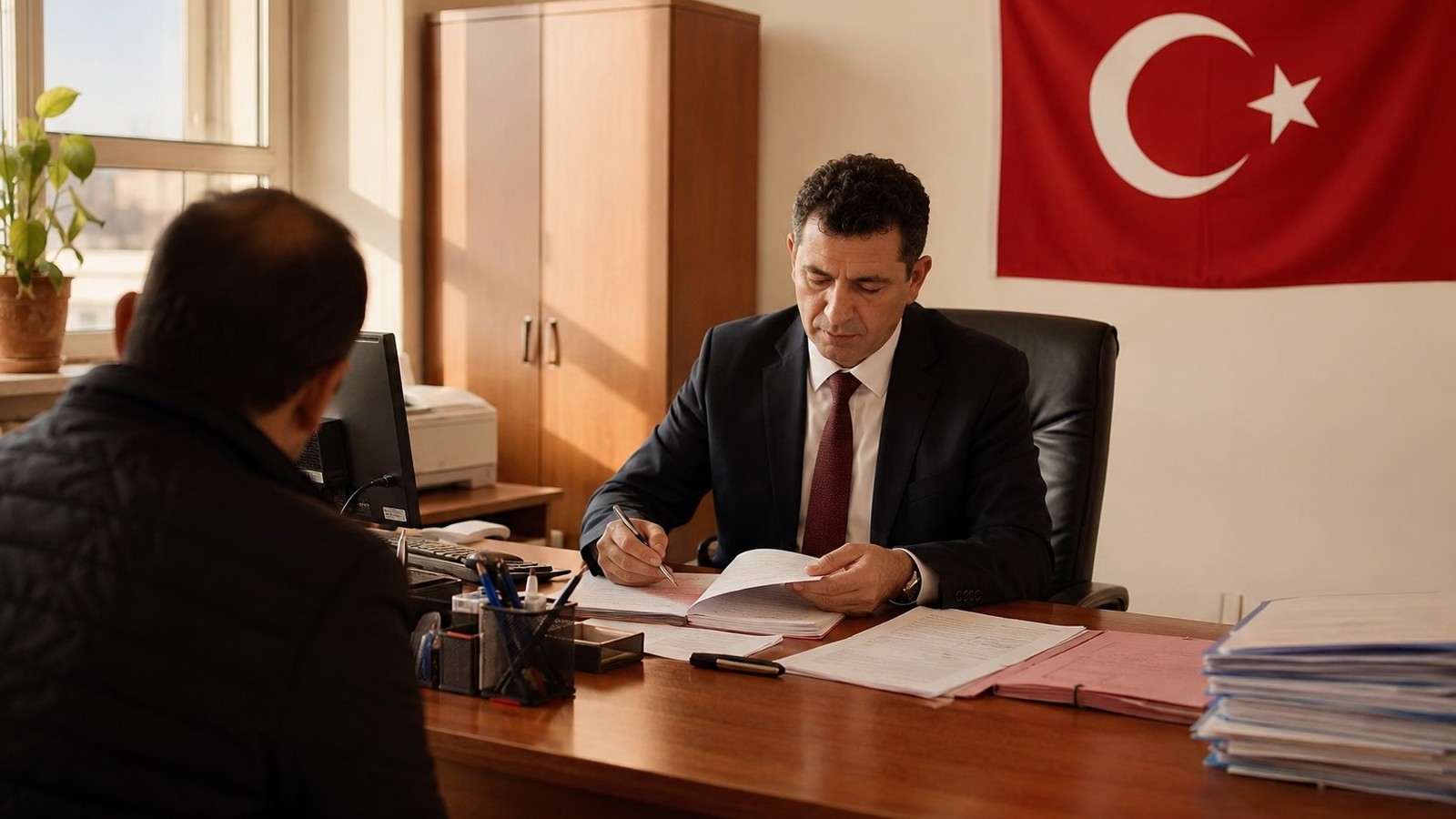
The appraised value must meet or exceed $400,000 at the USD/TRY exchange rate on the date of your application. This creates a timing risk: if the lira strengthens between your purchase and your application, a property you bought for $420,000 might appraise below the threshold in TRY terms. Build in a buffer.
The appraisal report is valid for 3 months. Do not get it too early, or you will need to pay for another one.
The DAB certificate
The Conformity Certificate (Uygunluk Belgesi), commonly called the DAB certificate, is issued by the Provincial Directorate of Environment and Urbanisation. It confirms your property purchase qualifies for the CBI programme. You apply for this after the appraisal is complete and before (or alongside) the tapu transfer.
Tapu annotation process
At the Land Registry (Tapu) office, two things happen simultaneously: the title deed transfers to your name, and the 3-year no-sale annotation is recorded. The annotation reads roughly as "this property cannot be sold for 3 years from [date] per the citizenship by investment regulation." Without this annotation, your citizenship application will be rejected.
For help navigating the title deed process, see our property purchase service.
Who Is Eligible
The investment route is remarkably open. Here is what you need (and what you do not):
- No residency requirement - You do not need to have lived in Turkey or held a residence permit.
- No language test - Unlike the naturalisation route, there is no Turkish language requirement.
- No age limit - Any adult applicant qualifies.
- Dual citizenship allowed - Turkey places no restrictions on holding multiple citizenships. Check your home country's rules though.
- Family included - Your spouse and children under 18 are covered by the same application. Children over 18 must apply independently.
- Most nationalities welcome - Citizens of almost every country can apply, though applicants from countries under international sanctions may face additional scrutiny or rejection.
There are no formal restrictions based on nationality, religion, or profession. The main reason applications get rejected is documentation problems or security screening issues, not eligibility.
Not sure if you qualify? Try our citizenship eligibility checker for a quick assessment.
Required Documents
This is where the process gets tedious. The document list is long, and every item must be exactly right. Missing a single apostille or using an uncertified translation will send you back to square one.
Personal documents
- Valid passport - Original plus notarised copy with sworn Turkish translation.
- Birth certificate - Apostilled in your home country, then sworn-translated into Turkish.
- Marriage certificate (if married) - Apostilled and sworn-translated. If your spouse is applying too, you both need this.
- Children's birth certificates (if including children) - Each apostilled and sworn-translated.
- Passport-size photographs - Biometric-standard photos for each applicant (typically 4 per person).
- Police clearance certificate - From your country of citizenship and/or country of residence, apostilled and sworn-translated. Must be recent (typically within 6 months).
Property and investment documents
- Title deed (tapu) - With the 3-year no-sale annotation.
- SPK appraisal report - Must be current (valid for 3 months).
- DAB Conformity Certificate - From the Provincial Environment Directorate.
- Proof of payment - Bank transfer receipts showing the full purchase amount was transferred from abroad (SWIFT transfers required - cash payments do not qualify).
- Property purchase contract - The signed sales agreement.
For the bank deposit or bonds route, you will need confirmation letters from the bank or brokerage instead of property documents.
The Apostille and Sworn Translation Hassle
This section exists because every other guide skips it, and it is the part that actually catches people out.
An apostille is a standardised international certification that proves a document is genuine. Turkey is a member of the Hague Apostille Convention, so documents from other member countries can be apostilled rather than going through full consular legalisation.
The practical problems
- You usually need to apostille in person - Most countries require you to visit a government office (typically the Foreign Ministry or a designated court) to get an apostille stamp. Some allow postal applications; many do not.
- Birth certificates may need re-issuing - Many countries will not apostille an old birth certificate. You may need to order a fresh copy, then apostille that. This can take 2-4 weeks depending on the country.
- Police clearances expire quickly - Most are valid for only 3-6 months. If your citizenship application is delayed, you may need to get a new one and have it apostilled and translated again.
- Sworn translations must be done in Turkey - A "certified translation" from your home country is not accepted. The translation must be done by a sworn translator (yeminli tercuman) registered with a Turkish notary. See our guide to sworn translations in Turkey.
- Each translation costs money - Budget 500-1,500 TRY per document for sworn translation. With 6-10 documents to translate, this adds up fast.
- Notary certification on top - After translation, many documents also need notary certification. That is another fee and another visit. Our notary guide explains how this works.
Realistically, getting all your documents apostilled, translated and notarised will take 2-6 weeks and cost $500-$1,500 on top of everything else. It is boring, expensive and absolutely non-negotiable. Do not leave this until the last minute.
Step-by-Step Application Process
Here is the actual sequence, assuming you are going with the property route:
1. Buy the property
Find a qualifying property, negotiate the price, and complete the purchase. Payment must be made via international bank transfer - bring the SWIFT confirmation. You will need a Turkish tax number and a Turkish bank account to proceed. See our bank account guide if you do not have one yet.
2. Get the appraisal
Commission an SPK-licensed appraisal. The appraiser will inspect the property and produce a valuation report. This typically takes 3-7 business days and costs 10,000-15,000 TRY (approximately $300-$450).
3. Get the DAB certificate
Apply at the Provincial Directorate of Environment and Urbanisation. Processing takes 1-3 business days in most cities.
4. Complete the tapu transfer
At the Land Registry office, transfer the title deed and have the 3-year annotation placed simultaneously. You will need the appraisal report, your passport, tax number, and the seller's documents. A sworn translator must be present if you do not speak Turkish.
5-6. Documents and translations
While the property purchase is happening (or ideally before), get your personal documents apostilled in your home country and then sworn-translated in Turkey. Do not underestimate the time this takes.
7. Submit at Nufus
Take everything to the Nufus Mudurlugu (Civil Registry and Citizenship Directorate). They will check your documents, open your file, and issue a receipt. Your spouse and children's documents are submitted at the same time.
8. Biometrics
Fingerprints and photographs are taken at the Nufus office. Sometimes this happens on the submission day; sometimes you are given a separate appointment.
9. Wait
Your application goes through security screening and inter-agency checks. You can track the status on e-Devlet (Turkey's e-Government portal). There is nothing to do during this phase except wait.
10. Oath and ID
Once approved, you attend the oath ceremony at the Nufus office, receive your Turkish national ID card (kimlik), and can immediately apply for a Turkish passport.
Timeline: How Long Does It Actually Take?
The official line is "90 days," but in practice the timeline looks more like this:
| Stage | Typical Duration |
|---|---|
| Property search and purchase | 1-4 weeks |
| SPK appraisal | 3-7 business days |
| DAB certificate | 1-3 business days |
| Tapu transfer and annotation | 1-2 business days |
| Document preparation (apostille + translation) | 2-6 weeks |
| Application submission | 1 day |
| Processing and security screening | 3-9 months |
| Oath ceremony and ID collection | 1-2 weeks after approval |
| Total (realistic) | 6-12 months |
The biggest variable is the security screening. Some nationalities are processed faster than others, and there is no way to speed it up. If your file has any missing documents or discrepancies, the clock resets.
Cost Breakdown: What You Will Actually Spend
Nobody buys Turkish citizenship for $400,000. The real number is higher. Here is an honest breakdown:

| Item | Cost (Approx.) |
|---|---|
| Property purchase | $400,000+ (the minimum) |
| Title deed transfer tax (tapu harci) | 4% of declared value (~$16,000) |
| SPK appraisal fee | $300-$450 |
| Sworn translations (6-10 documents) | $300-$700 |
| Notary fees | $200-$500 |
| Apostille fees (varies by country) | $100-$400 |
| Citizenship application fee | ~$50 |
| Passport application fee | ~$30 |
| Lawyer fees (highly recommended) | $3,000-$8,000 |
| Agent/consultancy fees (if used) | $2,000-$5,000 |
| Total realistic budget | $422,000-$431,000+ |
The title deed tax alone adds roughly $16,000. Lawyer fees vary enormously - some charge a flat fee, others take a percentage. Shop around, but do not skip legal representation to save money. A good CBI lawyer will pay for themselves by avoiding costly mistakes.
For a broader picture of property-related costs, see our tax guide for Turkey.
The US E-2 Treaty Investor Visa Angle
This is one of the less-discussed but significant reasons people pursue Turkish citizenship. Turkey has a bilateral investment treaty with the United States, which means Turkish passport holders can apply for an E-2 Treaty Investor Visa.
The E-2 visa allows you to live and work in the US by investing in (or buying) a US-based business. It is renewable indefinitely and extends to your spouse (who receives work authorisation) and children under 21. It is not a green card, but it is a legitimate long-term pathway to living in America.
This is particularly valuable for citizens of countries that do not have their own E-2 treaty with the US - including Russia, China, India, and many Middle Eastern nations. Getting Turkish citizenship effectively unlocks this visa category.
The E-2 visa itself requires a separate US investment (typically $100,000+), a viable business plan, and a US consular application. But the point is: without a qualifying passport, you cannot even apply. A Turkish passport gives you that eligibility.
Turkish Passport Benefits
Beyond the E-2 angle, a Turkish passport is genuinely useful:
- Visa-free or visa-on-arrival access to 110-120+ countries - Including Japan, South Korea, Singapore, most of South America, and all of Central Asia. The list grows as Turkey's diplomatic relationships expand.
- EU candidate country - While EU membership is not imminent, Turkey's candidate status provides certain travel and business advantages in Europe.
- Growing diplomatic weight - Turkey is a G20 member and NATO ally, which carries practical benefits for passport holders in terms of consular support abroad.
- No inheritance tax issues - Turkish citizenship simplifies property inheritance within Turkey considerably.
- Access to Turkish public services - Healthcare (SGK), education, and social security are available to citizens on favourable terms.
- Voting rights and full civic participation - Though this matters more to long-term residents than investment citizens.
The Republic of Turkiye Investment Office publishes the latest passport ranking data and visa-free destination lists.
Where Applications Stall or Get Rejected
Most investment-route applications are approved, but problems do arise. These are the most common reasons for delays or rejection:
- Wrong appraisal company - Using a non-SPK-licensed appraiser is an automatic rejection. There is no workaround - you have to get a new appraisal from an approved firm.
- Property valuation falls short - If the appraised value comes in below $400,000 at the current exchange rate, the application cannot proceed. This catches people who bought at the exact threshold without a buffer.
- Missing or expired apostilles - Apostilles from some countries are only valid for 6 months. If your application is delayed, you may need fresh ones.
- Translation issues - Using a non-sworn translator, or a translation that does not match the original, will get your documents rejected at submission.
- Annotation not in place - If the 3-year no-sale annotation was not properly recorded on the tapu, the Nufus office will not accept the application.
- Security screening - This is opaque and out of your control. Applicants from certain countries face longer and more detailed screening. In rare cases, applications are rejected on security grounds with no explanation.
- Property previously used for CBI - If the previous owner used the same property for their own citizenship application and the 3-year period has not lapsed, it will not qualify again.
The best protection against all of these is a competent CBI lawyer. Seriously. Do not try to do this solo to save $5,000.
Citizenship by Marriage
If you are married to a Turkish citizen, you can apply for citizenship after 3 years of marriage. The process is different from the investment route:
- You must have been continuously married for at least 3 years at the time of application.
- You apply at the Nufus Mudurlugu with your marriage certificate, residence permit, and other personal documents.
- An investigation follows - officials may visit your home, interview neighbours, and speak to both spouses separately. They are checking that the marriage is genuine.
- There is no investment requirement, but you must hold a valid residence permit.
- Processing takes 6-18 months after submission.
- If the marriage ends (by divorce or death) before citizenship is granted, the application is typically cancelled.
The marriage route is free of investment minimums, but the investigation process can feel invasive. It is designed to prevent marriages of convenience, and the authorities take it seriously.
Naturalisation After 5 Years of Residency
The standard path to Turkish citizenship - no investment required, just patience and paperwork:
- 5 years continuous residency - You must have lived in Turkey on a valid residence permit for at least 5 uninterrupted years. Short trips abroad are fine; extended absences are not.
- Turkish language ability - You need to demonstrate a basic working knowledge of Turkish. There is no formal exam, but the interview at the Nufus office is conducted in Turkish.
- Sufficient income - You must show you can support yourself financially. There is no fixed amount, but you will need to provide evidence of income or savings.
- Good character - No criminal record in Turkey, and generally clean record internationally.
- Intention to settle - Evidence that you plan to continue living in Turkey: property ownership, business ties, children in Turkish schools, and so on.
- Healthcare - You should be enrolled in SGK (social security) or hold private health insurance.
Processing time for naturalisation applications is typically 12-24 months. It is the cheapest route but by far the slowest, and the language and residency requirements mean it is not suitable for everyone.
You will need a valid residence permit throughout the entire 5-year period. If your permit lapses or you leave Turkey for an extended period, the clock resets.
For information on working legally during your residency period, see our work permit guide.
Official resources
- Republic of Turkiye Investment Office - Official investment and citizenship programme information
- Presidency of Migration Management (Goc Idaresi) - Residence permits and immigration
- General Directorate of Civil Registration and Citizenship (Nufus) - Citizenship applications and status
- e-Devlet (e-Government Portal) - Track your application status online